
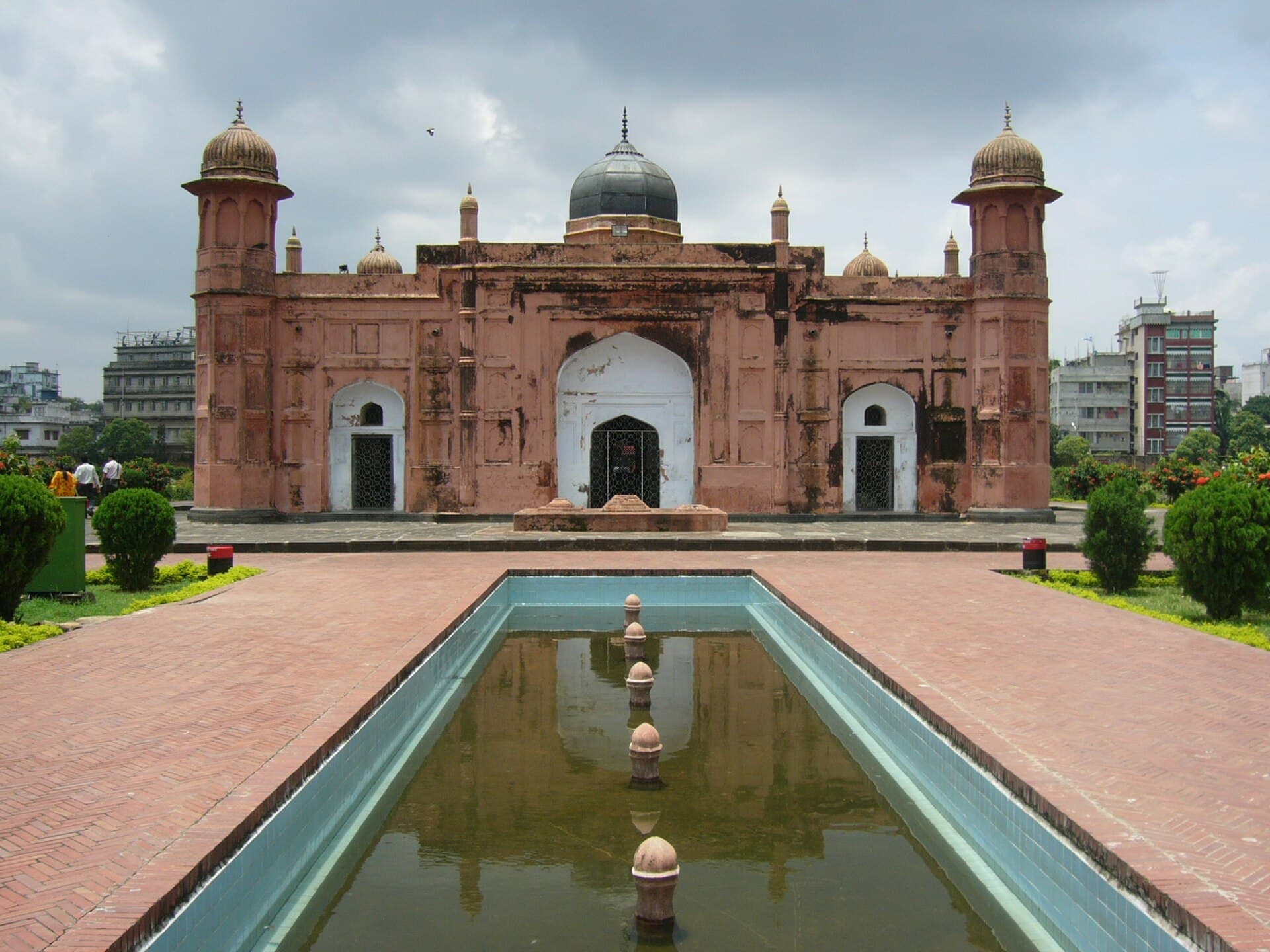
Mughal garden fort in Dhaka
Lalbagh Fort
Lalbagh Fort is an unfinished Mughal-era complex in Old Dhaka, where gateways, gardens, water channels, a mosque and the tomb of Pari Bibi form one of the city’s clearest historic ensembles.
Lalbagh Fort — unfinished seventeenth-century complex
Know the place
A closer look at Lalbagh Fort
Lalbagh Fort is an unfinished Mughal-era complex in Old Dhaka, where gateways, gardens, water channels, a mosque and the tomb of Pari Bibi form one of the city’s clearest historic ensembles.
- Setting
- Mughal garden fort
- Known for
- Unfinished seventeenth-century complex
- Visit character
- Architecture and garden walk
01
Why Lalbagh Fort matters
Construction began under Prince Muhammad Azam in the seventeenth century and the complex remained unfinished. Its surviving buildings and formal landscape make it a compact introduction to Mughal Dhaka.
02
What to notice
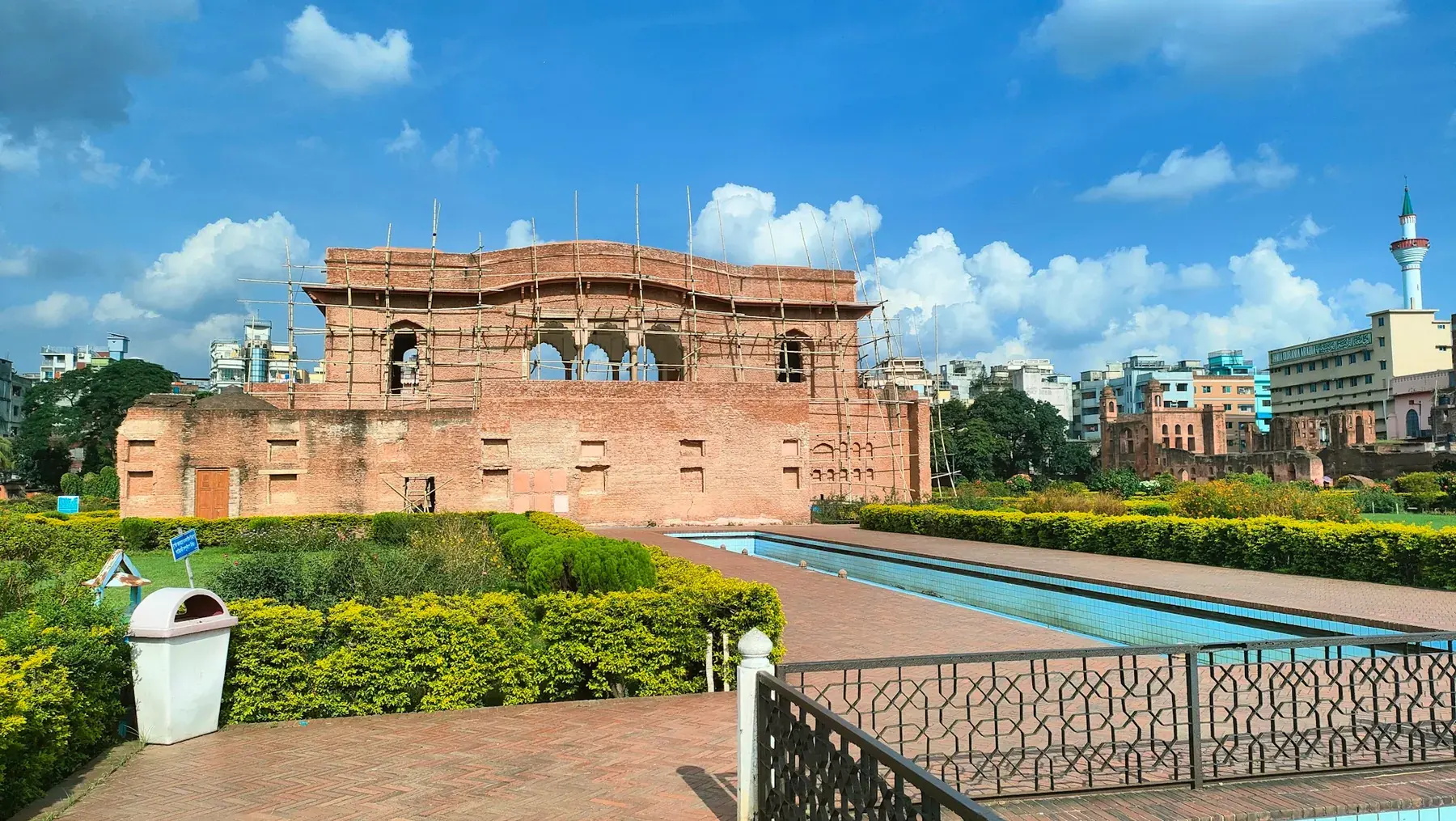
Look beyond the main façades to the geometry of the gardens, the waterworks and the relationship between the mosque, audience hall and Pari Bibi’s tomb.
Seen in context, Lalbagh Fort is not simply about unfinished seventeenth-century complex. Its mughal garden fort character becomes clearer when visitors slow down, compare details across the site and leave room for the everyday activity and changing conditions that continue around it.
03
Planning the visit
A local guide helps place the monument within Old Dhaka’s wider story. Opening days and access can change, so the stop should be confirmed before setting out.
04
How to plan a focused visit
Use Lalbagh Fort as one stop in a geographically focused Dhaka day. The mughal garden fort setting and emphasis on unfinished seventeenth-century complex are easier to understand when you compare visible details instead of rushing between photo points. Read the cited background before arrival, then use on-site signs and current staff guidance to check anything that may have changed.
For this architecture and garden walk experience, allow time to notice how the place functions today as well as its historic or landscape context. Morning or later afternoon usually offers gentler light and a more comfortable garden walk. Keep the wider route flexible around traffic, weather, worship, security screening or access rules that apply on the day. Use the practical notes below as a pre-departure checklist. If you want transport, pacing and nearby stops arranged as one coherent itinerary, continue to the linked parent tour and share your access needs, interests and preferred walking time before booking.
Plan your visit
Arrive with the right context
- 01
Morning or later afternoon usually offers gentler light and a more comfortable garden walk.
- 02
Expect security screening and some exposed walking between buildings.
- 03
Respect barriers, museum rules and worshippers; do not climb historic fabric.
Photo essay
Lalbagh Fort, frame by frame

Continue the journey
Visit on the Old Dhaka Heritage Tour
This place is one part of a broader private journey. Final timing and access are confirmed around season, local conditions, and your preferred pace.
Travel notes
Frequently asked questions
01How does Lalbagh Fort fit into a private Dhaka tour?
The stop is connected to its parent city itinerary and can be paced around local conditions, opening rules and your interests. A private route also leaves room for nearby landmarks, traffic, breaks and the pace you prefer. Confirm current access before departure so the day remains realistic.
02When is a good time to visit Lalbagh Fort?
Morning or later afternoon usually offers gentler light and a more comfortable garden walk. Check current opening, access, weather and local conditions before setting out, because they can change. A local guide can fit the stop into a practical Dhaka route.